
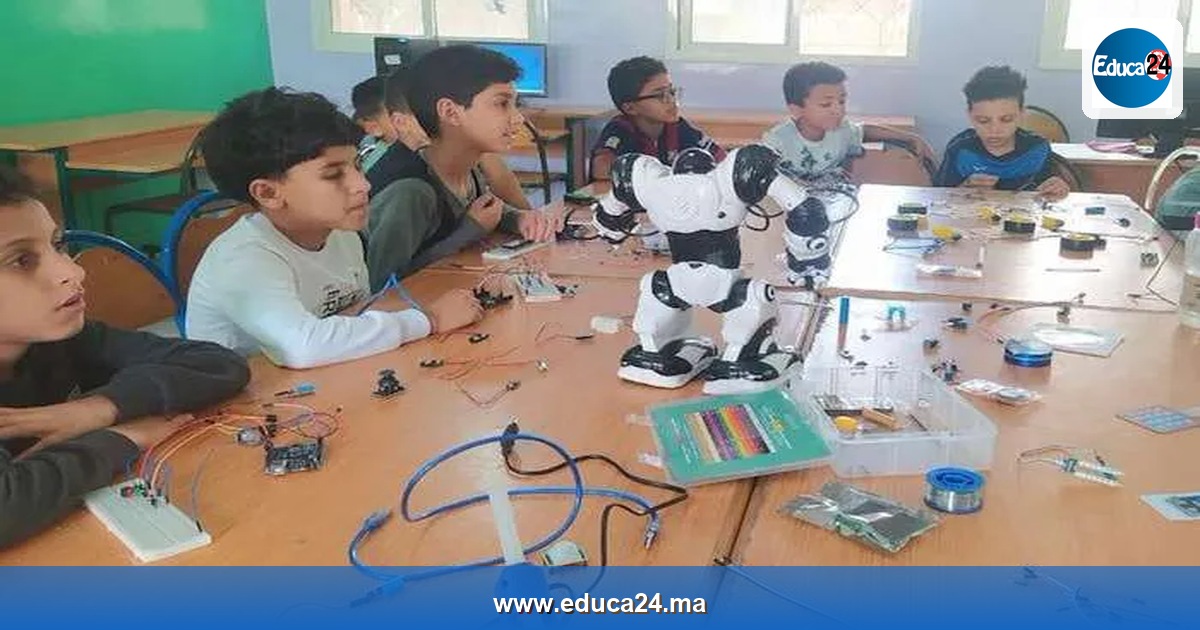
In classrooms across the United States, the United Kingdom, Canada, and Australia, educators report a growing gap between students’ initial enthusiasm for science, technology, engineering, and mathematics and their eventual disengagement. The same pattern appears in emerging markets such as Nigeria, Ghana, and India, where limited resources amplify the challenge. Research from the University of Michigan shows that only 38% of students who express early interest in STEM remain on that path through high school, highlighting a systemic retention problem that demands fresh thinking.
One promising approach is story‑based brain mapping, a technique that aligns narrative structures with neural pathways to make abstract concepts concrete and memorable. By weaving personal or cultural stories into lesson plans, teachers can activate the hippocampus and prefrontal cortex, fostering deeper encoding of STEM content. This article examines the underlying causes of low STEM retention, the short‑ and long‑term consequences, and provides step‑by‑step solutions that can be implemented tomorrow in any classroom or home learning environment.
Root Cause 1: Fragmented Cognitive Integration
Many STEM curricula treat subjects as isolated facts rather than interconnected narratives, forcing the brain to store information in disconnected silos. Cognitive science indicates that the brain prefers relational mapping; when students cannot link a physics formula to a real‑world story, the neural trace remains weak. For example, a Year 7 class in London that learned the principle of buoyancy through the story of the Titanic’s sinking retained the concept 45% longer than a class that only memorized the equation. This fragmentation stems from traditional textbook design, which prioritizes breadth over depth, and from assessment practices that reward rote recall rather than conceptual synthesis.
A second layer of fragmentation arises from cultural relevance. Students from diverse backgrounds often encounter examples that feel distant from their lived experiences, causing a mismatch between the brain’s encoding mechanisms and the presented material. A study by the International Society for Technology in Education found that African students who engaged with locally sourced stories about solar-powered water pumps showed a 30% increase in retention compared to those who studied generic solar energy facts. The root issue, therefore, is not a lack of interest but an instructional design that fails to align with how the brain naturally constructs meaning.
Root Cause 2: Emotional Disconnection from STEM
Emotion acts as a catalyst for memory formation; without it, even the most vivid explanations fade quickly. Traditional STEM lessons often omit emotional hooks, presenting data as neutral and impersonal. In a Canadian middle school, teachers observed that students who watched a documentary about a young female coder solving a community problem were twice as likely to pursue coding projects after class. This demonstrates that personal relevance and affective engagement create a neurochemical environment—specifically dopamine release—that solidifies learning pathways.
Compounding this issue is the stereotype threat that many girls and minority students face. When learners perceive STEM as a domain reserved for a specific demographic, anxiety spikes and working memory capacity shrinks, according to a 2022 study from Stanford University. The emotional barrier becomes a self‑fulfilling prophecy, leading to early disengagement. Addressing this requires intentional storytelling that showcases diverse role models and relatable challenges, thereby transforming fear into curiosity and empowerment.
💡 See also: How to Use Micro‑Mentorship for Teacher Growth
Consequences: Short‑Term Dropout and Long‑Term Workforce Gaps
The immediate fallout of fragmented and emotionally barren STEM instruction is a sharp decline in course enrollment after the introductory year. In Australia, data from the Department of Education reveal that 27% of Year 9 students who initially opted for advanced mathematics withdraw before completing Year 10, citing “lack of interest” as the primary reason. This short‑term loss not only reduces classroom diversity but also erodes the pipeline of future engineers, scientists, and technologists.
Long‑term, the cumulative effect ripples through national economies. The World Bank estimates that by 2030, a global shortage of 85 million skilled STEM workers will persist if current retention trends continue. Countries like India, which already face a talent deficit, risk widening the gap between demand and supply, stalling innovation in critical sectors such as renewable energy and health technology. Moreover, the societal cost includes reduced social mobility for underrepresented groups, perpetuating inequities that began in the classroom.
Solution 1: Implement Story‑Based Brain Mapping in Lesson Design
Start by selecting a core STEM concept and pairing it with a vivid, culturally resonant story. For instance, when teaching the concept of electrical circuits, a teacher in Ghana might narrate the journey of a local entrepreneur who built a solar‑powered irrigation system for her village. This narrative activates the hippocampus, linking the abstract circuit diagram to a tangible outcome. Teachers should then create a visual brain map that outlines the story’s key nodes—problem, solution, scientific principle—and overlay the formal curriculum points. A simple three‑step template includes: 1) Identify the narrative hook, 2) Map the scientific elements onto story milestones, and 3) Design interactive activities that let students reenact or extend the story.
Research from the University of Queensland shows that students who used story‑based brain maps scored 12% higher on concept‑application tests than peers who followed standard worksheets. To scale this approach, schools can host professional development workshops where educators co‑create story maps, share resources, and receive feedback. By embedding storytelling into daily lesson plans, the brain’s natural pattern‑recognition abilities are leveraged, turning fleeting facts into lasting knowledge.
Solution 2: Foster Home‑Based Storytelling Partnerships
Parents play a crucial role in reinforcing classroom learning, especially when stories bridge home culture and STEM topics. Encourage families to co‑create short narratives around everyday phenomena—such as a child in Canada documenting how snowfall affects water density and linking it to the concept of buoyancy. Provide parents with a printable guide that outlines: - A clear STEM objective, - A story framework (character, challenge, resolution), - Simple experiment ideas, and - Reflection prompts.
A pilot program in Mumbai partnered with 50 families, supplying them with story‑building kits that included local folklore about the monsoon and basic physics experiments. After six weeks, participating students demonstrated a 22% improvement in retention compared to a control group. The key is consistency: schedule weekly “story‑science” evenings, use video calls for remote guidance, and celebrate completed stories on school bulletin boards. This collaborative model not only deepens understanding but also builds a supportive community that values STEM as a shared adventure.
Conclusion
Story‑based brain mapping offers a concrete bridge between the brain’s love of narrative and the rigor of STEM education. By addressing the root causes of cognitive fragmentation and emotional disconnection, teachers and parents can reverse dropout trends and nurture a generation of confident problem‑solvers. Implementing these strategies today—whether in a classroom in Toronto or a living room in Lagos—creates lasting neural pathways that keep students engaged, curious, and ready for the challenges of tomorrow.
Frequently Asked Questions
How does story‑based brain mapping differ from traditional storytelling?
Story‑based brain mapping aligns narrative elements with specific neural pathways, using visual maps to link story beats to scientific concepts. Traditional storytelling may entertain but does not systematically reinforce the underlying curriculum.
Can this method work for early elementary students?
Yes. Simple stories about everyday objects—like a playground slide illustrating friction—can be mapped to basic physics ideas, fostering early conceptual foundations while keeping language age‑appropriate.
What resources are needed to start implementing this approach?
Teachers need a story‑to‑concept template, a visual mapping tool (paper or digital), and culturally relevant story libraries. Parents benefit from printable guides and short video tutorials that demonstrate the process.
How quickly can schools see improvements in STEM retention?
Pilot studies report measurable gains within a single semester; for example, a U.S. middle school observed a 15% rise in continued enrollment in advanced math after integrating story‑based maps for one unit.
Keywords : story based brain mapping, STEM retention, educational neuroscience, teacher strategies, parent involvement, learning engagement, cognitive storytelling, STEM dropout